
Introduction
Every business transaction tells a story. Some are small, like buying office supplies, while others involve salaries, loans, or major sales. What keeps all these stories organized and trustworthy is the account ledger, a quiet but powerful backbone of accounting systems worldwide.
An account ledger is more than just a record book. It’s the place where financial truth lives, showing exactly where money comes from, where it goes, and how it impacts a business over time. Without it, even profitable companies can lose control of their finances faster than they realize.
In reality, whether you’re a student learning accounting, a freelancer managing income, or a business owner preparing for audits, understanding how a ledger works can save you from costly mistakes and confusion.
Table of Contents
What Is an Account Ledger
Why an Account Ledger Is Important
Types of Account Ledgers
How an Account Ledger Works
Account Ledger vs Journal
Structure of an Account Ledger
Real-Life Examples of Account Ledgers
Digital vs Manual Account Ledgers
Common Errors in Ledger Maintenance
Best Practices for Maintaining an Account Ledger
Personal Background: The Role of Ledgers in Accounting Careers
FAQs
Conclusion
What Is an Account Ledger
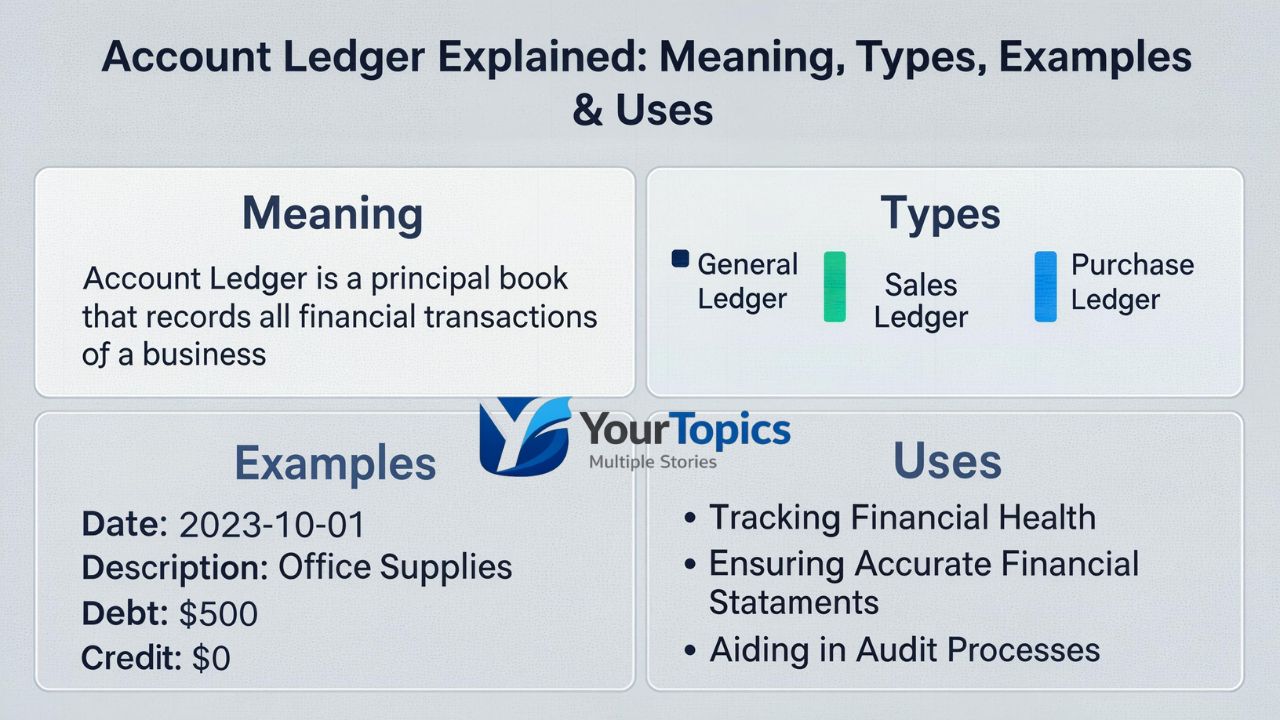
An account ledger is a structured record that summarizes all financial transactions related to a specific account, such as cash, sales, expenses, assets, or liabilities. Each ledger account reflects debits and credits derived from journal entries.
In simple words, journals record transactions chronologically, while the ledger organizes them account-wise. This organization allows accountants to see balances clearly and prepare financial statements accurately.
[Image: infographic showing flow from journal entries to ledger accounts]
Why an Account Ledger Is Important
Without a ledger, financial data becomes scattered and unreliable. The ledger acts as the single source of truth for accounting records.
Here’s why it matters:
- Helps track income and expenses accurately
- Forms the base for trial balance and financial statements
- Supports audits and regulatory compliance
- Detects errors and inconsistencies early
- Improves financial decision-making
However, poor ledger maintenance can lead to misstated profits, tax issues, and even legal trouble.
Types of Account Ledgers
General Ledger
The general ledger is the master record that contains all accounts used by a business. It includes assets, liabilities, equity, income, and expenses.
Most companies rely on the general ledger to prepare:
- Balance sheets
- Income statements
- Cash flow statements
Subsidiary Ledger
A subsidiary ledger provides detailed information for a specific control account, such as accounts receivable or accounts payable.
For example:
- Customer-wise outstanding balances
- Supplier-wise payment records
That said, subsidiary ledgers always reconcile with the general ledger.
Personal Ledger
A personal ledger records transactions related to individuals, such as customers, vendors, or employees.
Examples include:
- Salary payable to employees
- Customer receivables
Real Ledger
A real ledger tracks tangible and intangible assets like:
- Cash
- Machinery
- Buildings
- Intellectual property
These accounts usually carry balances forward to the next accounting period.
Nominal Ledger
Nominal ledgers record income, expenses, gains, and losses. Unlike real accounts, they reset at the end of each accounting period.
How an Account Ledger Works
The working of an account ledger follows a logical flow:
- A transaction occurs
- It is recorded in the journal
- The transaction is posted to relevant ledger accounts
- Balances are calculated
- Financial reports are prepared
Each ledger entry includes:
- Date
- Description
- Debit amount
- Credit amount
- Running balance
This structure ensures transparency and traceability.
Account Ledger vs Journal
Although closely related, journals and ledgers serve different purposes.
| Feature | Journal | Account Ledger |
|---|---|---|
| Purpose | Initial recording | Classification |
| Order | Chronological | Account-wise |
| Detail | Transaction detail | Account balance |
| Use | First entry | Financial reporting |
In reality, journals tell the story, but the ledger explains the outcome.
Structure of an Account Ledger
A standard account ledger is divided into two sides:
Debit Side
- Increases assets and expenses
- Decreases liabilities and income
Credit Side
- Increases liabilities, equity, and income
- Decreases assets and expenses
Each side records amounts separately, making balancing straightforward.
[Image: ledger T-account format diagram]
Real-Life Examples of Account Ledgers
Small Business Example
A retail shop records:
- Cash sales
- Inventory purchases
- Rent expenses
Each transaction moves from journal to ledger, allowing the owner to see profit clearly at month-end.
Freelancer Example
A freelancer maintains ledger accounts for:
- Client payments
- Software subscriptions
- Taxes payable
This approach prevents under-reporting income or missing deductions.
Corporate Example
Large companies use ERP systems where millions of ledger entries update automatically, supporting real-time reporting and audits.
Digital vs Manual Account Ledgers
Manual Ledgers
Advantages:
- Simple to understand
- Low cost
Disadvantages:
- High risk of errors
- Time-consuming
- Difficult to audit
Digital Ledgers
Advantages:
- Automated posting
- Real-time updates
- Strong audit trails
- Easy backups
Disadvantages:
- Software costs
- Training required
In reality, most modern businesses prefer digital ledger systems for accuracy and scalability.
Common Errors in Ledger Maintenance
Even experienced accountants make mistakes. Common issues include:
- Incorrect posting of debits and credits
- Missing transactions
- Duplicate entries
- Failure to reconcile subsidiary ledgers
- Ignoring opening balances
However, regular reviews and reconciliations significantly reduce these risks.
Best Practices for Maintaining an Account Ledger
To keep your account ledger accurate and reliable:
- Post transactions daily
- Reconcile accounts monthly
- Use standardized account codes
- Maintain documentation for every entry
- Review balances before closing periods
On the other hand, ignoring these practices often leads to financial confusion and stress.
Personal Background: The Role of Ledgers in Accounting Careers
Most professional accountants begin their careers mastering ledger posting. From junior accountants to CFOs, the ability to interpret ledger balances is a foundational skill.
Career Journey
Accountants typically start with:
- Journal entry preparation
- Ledger posting
- Trial balance analysis
Over time, they progress to:
- Financial analysis
- Audit leadership
- Strategic financial planning
Achievements
Professionals skilled in ledger management often excel in:
- Audit roles
- Financial controller positions
- ERP implementation projects
Financial Insights
While net worth varies widely, experienced accounting professionals with strong ledger and reporting expertise often command higher salaries and consulting opportunities, especially in regulated industries.
FAQs
What is an account ledger in simple terms?
An account ledger is a record that shows all transactions related to a specific account, including debits, credits, and balances.
How many times should ledger accounts be updated?
Ideally, ledger accounts should be updated daily or in real time using accounting software.
Is an account ledger used in small businesses?
Yes, even small businesses rely on an account ledger to track income, expenses, and cash flow accurately.
Can digital ledgers replace manual ledgers?
In most cases, digital ledgers are more accurate, secure, and efficient than manual ones.
What happens if a ledger is not balanced?
An unbalanced ledger can lead to incorrect financial statements and audit issues.
Is the general ledger the same as an account ledger?
A general ledger contains multiple account ledger records under one system.
Who uses ledger accounts?
Accountants, auditors, finance managers, business owners, and students all use ledger accounts.
Conclusion
Understanding how an account ledger works isn’t just for accountants. It’s a practical skill that brings clarity, confidence, and control to financial decision-making. From tracking daily expenses to preparing audited financial statements, the ledger remains a timeless pillar of accounting.
When maintained correctly, it transforms raw transactions into meaningful financial insight. And in a world driven by numbers, that insight makes all the difference.