
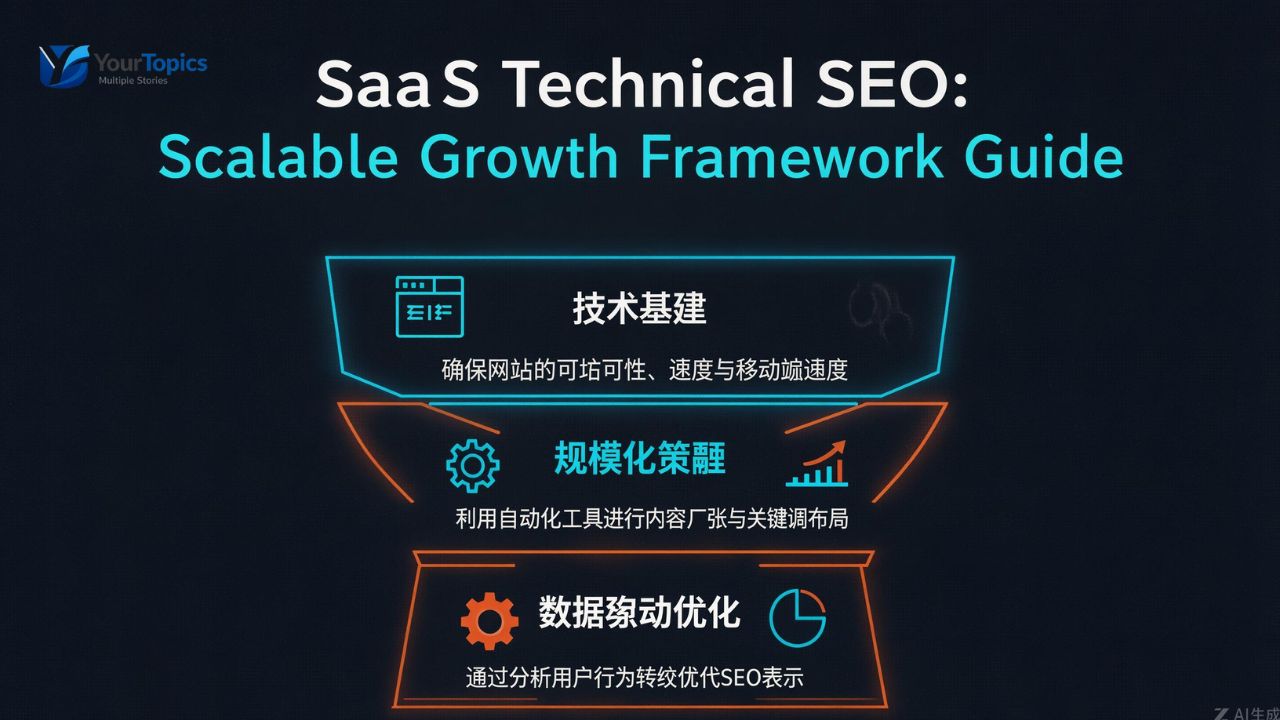
When a SaaS company hits a growth plateau, it’s rarely because the product isn’t good. More often, it’s because search engines can’t properly crawl, interpret, or prioritize the site. That’s where saas technical seo quietly becomes the difference between flatlining traffic and predictable organic growth.
In reality, SaaS businesses face unique SEO challenges. You’re not just ranking blog posts. You’re scaling landing pages, feature hubs, documentation, comparison pages, subdomains, and sometimes even dynamic app environments. If your technical foundation is weak, your entire acquisition engine suffers.
This guide breaks down exactly how saas technical seo works, why it matters for recurring revenue models, and how to build a search-ready infrastructure that compounds over time.
What Is SaaS Technical SEO?
At its core, saas technical seo refers to optimizing the technical infrastructure of a Software-as-a-Service website to ensure search engines can efficiently crawl, render, index, and rank its content.
Unlike traditional business websites, SaaS platforms often include:
- Large documentation libraries
- Feature-based landing pages
- Comparison pages
- Dynamic dashboards
- Multiple subdomains
- API documentation
- International versions
Technical SEO here isn’t just about fixing broken links. It’s about engineering a scalable acquisition system.
Core Components of SaaS Technical SEO
- Crawlability – Ensuring bots access important pages.
- Indexing control – Managing what Google should and shouldn’t index.
- Site architecture – Designing logical, scalable structures.
- Page performance – Optimizing load speed and Core Web Vitals.
- Schema & structured data – Helping search engines understand content.
- Internal linking systems – Distributing authority strategically.
For SaaS companies with hundreds or thousands of URLs, small inefficiencies compound quickly.
Why SaaS Companies Need Technical SEO More Than Others
SaaS revenue models depend on recurring subscriptions. That changes the economics.
If your customer lifetime value (LTV) is $2,000–$10,000+, organic traffic becomes dramatically more profitable than paid ads over time.
However, SaaS sites often struggle because:
- Feature pages compete with blog content.
- Duplicate content exists across templates.
- Crawl budgets are wasted on parameterized URLs.
- JavaScript-heavy frameworks create rendering delays.
In B2B SaaS especially, buyers conduct deep research. According to Gartner research, B2B buyers spend over 70% of their decision journey researching independently before speaking to sales.
If your technical SEO is weak, you simply don’t show up during that research phase.
Site Architecture for SaaS Platforms
A strong structure is the backbone of effective saas technical seo.
Ideal SaaS URL Hierarchy
A scalable SaaS site typically looks like this:
/features/
/solutions/
/integrations/
/pricing/
/compare/
/blog/
/resources/
/docs/
/help/
Each section serves a distinct acquisition purpose.
Hub-and-Spoke Model
SaaS companies benefit from topic clusters:
- Pillar page (e.g., /project-management-software/)
- Supporting pages (use cases, industries, comparisons)
- Deep internal linking
This structure helps distribute topical authority while keeping crawl paths short.
Crawlability, Indexing & Log File Optimization
In large SaaS environments, crawl budget becomes critical.
Crawl Budget Explained
Google allocates limited crawl resources per domain. If bots waste time crawling:
- Faceted navigation
- Sorting parameters
- Staging URLs
- Test environments
Important pages get crawled less frequently.
Solutions
- Implement clean canonical tags.
- Use robots.txt strategically.
- Apply noindex to thin pages.
- Monitor server logs.
Log file analysis reveals:
- Which URLs Googlebot hits most.
- Crawl frequency trends.
- Orphan pages.
- JavaScript rendering issues.
High-growth SaaS companies often invest heavily in this layer because incremental indexing improvements drive exponential traffic gains.
Core Web Vitals & Performance for SaaS
Performance affects both rankings and conversion rates.
Google’s Core Web Vitals focus on:
- Largest Contentful Paint (LCP)
- Cumulative Layout Shift (CLS)
- Interaction to Next Paint (INP)
SaaS platforms often rely on JavaScript frameworks like React or Next.js. Improper rendering can slow indexation.
Optimization Tactics
- Server-side rendering (SSR)
- Static site generation (SSG)
- Lazy loading images
- CDN implementation
- Code splitting
A 1-second load time improvement can increase conversions by up to 7%, according to performance studies.
For subscription businesses, that’s revenue multiplied across every month.
International & Enterprise SaaS SEO Considerations
Many SaaS brands operate globally.
Technical considerations include:
- Proper hreflang implementation
- Geo-targeted subfolders (e.g., /uk/, /de/)
- Avoiding duplicate translated content
- Country-specific pricing pages
Enterprise SaaS sites may also exceed 50,000+ URLs, requiring:
- XML sitemap segmentation
- Priority mapping
- Automated SEO monitoring systems
At this scale, saas technical seo becomes infrastructure engineering rather than checklist optimization.
Documentation, Help Centers & Subdomains
One of the most overlooked areas in saas technical seo is documentation.
Many SaaS companies host docs on subdomains:
- docs.example.com
- support.example.com
This can dilute authority if not properly linked.
Best Practices
- Strong contextual linking from main domain.
- Consistent branding and design.
- XML sitemap integration.
- Avoid indexing internal search results.
Well-optimized documentation can rank for high-intent queries like:
- “how to automate X in [tool]”
- “API integration guide”
- “[tool] webhook setup”
These users are often closer to conversion.
Technical SEO for Product-Led Growth
Product-led growth (PLG) companies depend on self-serve acquisition.
That means:
- Free trial landing pages must be crawlable.
- Comparison pages must rank for competitor queries.
- Use-case pages must target bottom-funnel intent.
In PLG environments, saas technical seo directly impacts:
- Trial signups
- Demo requests
- Activation rate
For example:
If your competitor comparison page loads slowly or fails to index properly, you lose bottom-of-funnel traffic to faster competitors.
Technical SEO here directly impacts revenue velocity.
Personal Background: From Startup Marketer to SaaS SEO Strategist
Many SaaS SEO professionals begin in content marketing before transitioning into technical roles.
A typical journey looks like this:
- Start in startup growth marketing.
- Notice technical bottlenecks limiting rankings.
- Learn site architecture and crawl analysis.
- Specialize in technical frameworks.
- Work with Series A–C SaaS companies.
Top SaaS SEO consultants often command $8,000–$20,000 per month retainers. Enterprise-level consultants can exceed six-figure annual contracts.
This specialization exists because few marketers deeply understand both search engineering and SaaS business models.
Common Mistakes in SaaS Technical SEO
Even well-funded SaaS companies make costly mistakes.
1. Over-Reliance on JavaScript
Search engines struggle with heavy client-side rendering.
2. Duplicate Feature Pages
Templated pages with near-identical content create thin content risks.
3. Poor Internal Linking
Important revenue pages buried five clicks deep.
4. Ignoring Log Files
Without log analysis, crawl inefficiencies remain invisible.
5. Indexing Staging Environments
This happens more often than companies admit.
Technical debt in SaaS accumulates fast. If ignored, it suppresses growth silently.
FAQ
What makes saas technical seo different from regular technical SEO?
SaaS websites typically have dynamic architecture, documentation hubs, and product-driven acquisition funnels. That complexity requires more strategic crawl and indexing control.
How often should SaaS companies audit technical SEO?
At minimum, quarterly. High-growth SaaS businesses often monitor technical metrics weekly.
Does SaaS technical SEO help with demo bookings?
Yes. Optimized feature and solution pages rank for high-intent queries that lead directly to demo requests.
Should SaaS companies use subdomains or subfolders?
Subfolders often consolidate authority better, but the decision depends on platform architecture.
Is technical SEO more important than content?
They work together. Without technical optimization, even strong content struggles to rank.
Can small SaaS startups benefit from saas technical seo?
Absolutely. Early technical foundations prevent expensive restructuring later.
How long does it take to see results?
Improvements may appear within 4–8 weeks, but compounding gains often occur over 6–12 months.
Conclusion
Technical SEO isn’t glamorous. It doesn’t go viral on LinkedIn. It rarely gets public praise.
But for SaaS companies, it’s often the quiet engine behind sustainable growth.
When your infrastructure is optimized, search engines crawl efficiently, pages index correctly, and authority flows strategically across your site. Over time, that compounds into rankings, traffic, trials, and revenue.
If your SaaS growth feels stalled despite strong content and product quality, the issue may not be strategy — it may be architecture.
And that’s exactly where saas technical seo makes all the difference.